
Photovoltaic Pile Driving Equipment & Complete Solutions
Bench blasting is won or lost on three numbers — hole diameter, bench depth and rock hardness. Tell us those and we size the rig, the air package and the tooling as one system.
Solar farms are priced per pile. Speed per pile and the ability to work across a whole array determine the equipment, not the terrain.
Find the Right Rig for Your Mine
What Determines the Right Drill Rig?
Click a card to expand.
1. Pile diameter and depth
Solar array foundations are typically 115–500 mm. Hard-rock sites require drilling rather than driving, which is where a split-type DTH rig with fast relocation earns its cost.
| Site condition | Method | Priority |
|---|---|---|
| Soil / soft overburden | Driven pile | Speed and relocation |
| Hard rock, shallow overburden | DTH drilling | Penetration rate |
| Rock with boulders | DTH drilling | Bit life and air volume |
2. Relocation speed decides output
On a solar farm the rig moves hundreds of times. Machines that reposition quickly out-produce heavier rigs with better single-hole performance.
3. Air package
Match the compressor to the deepest and largest hole in the array, then confirm it keeps up when drilling continuously across the array.
Rig Selection
Grouped by duty. Filter to narrow the range.
15 models available
Mid-Range
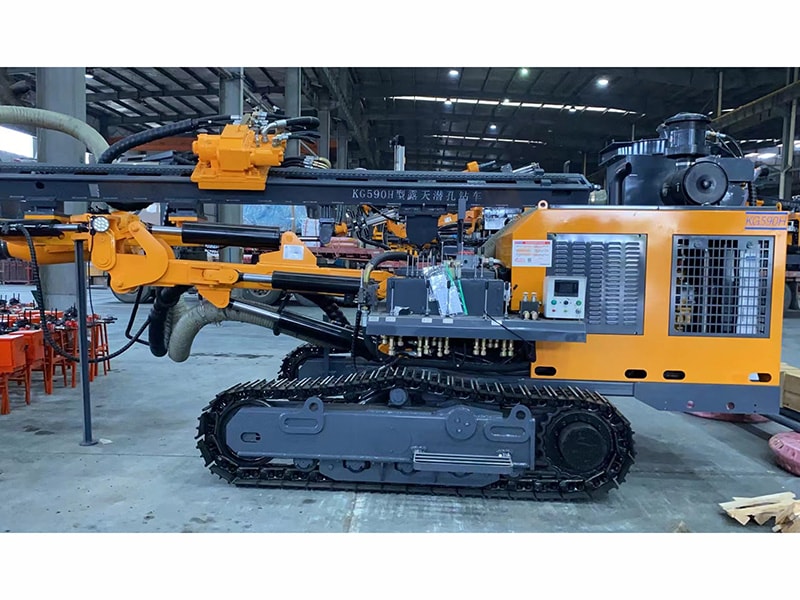
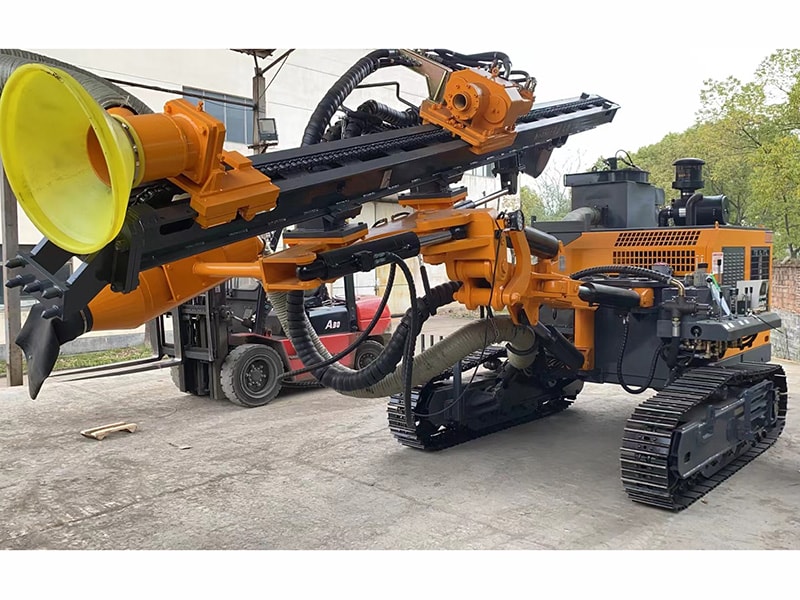
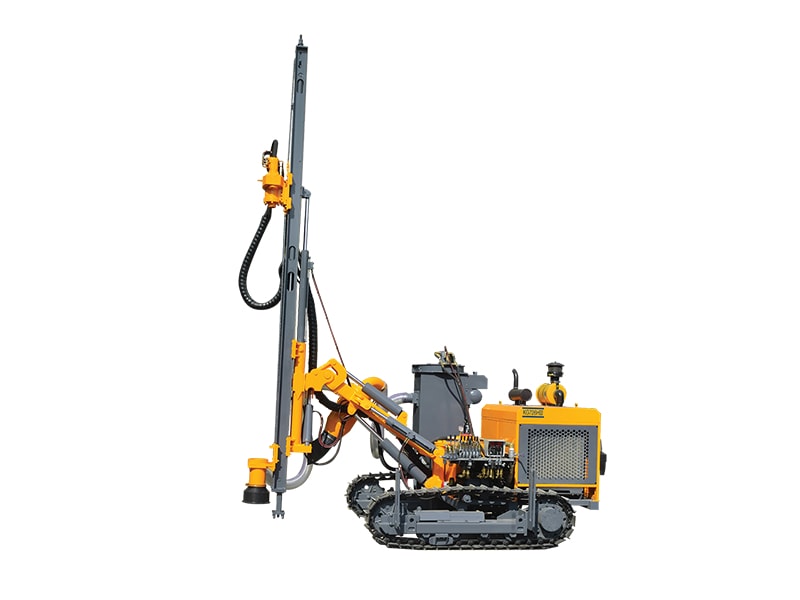
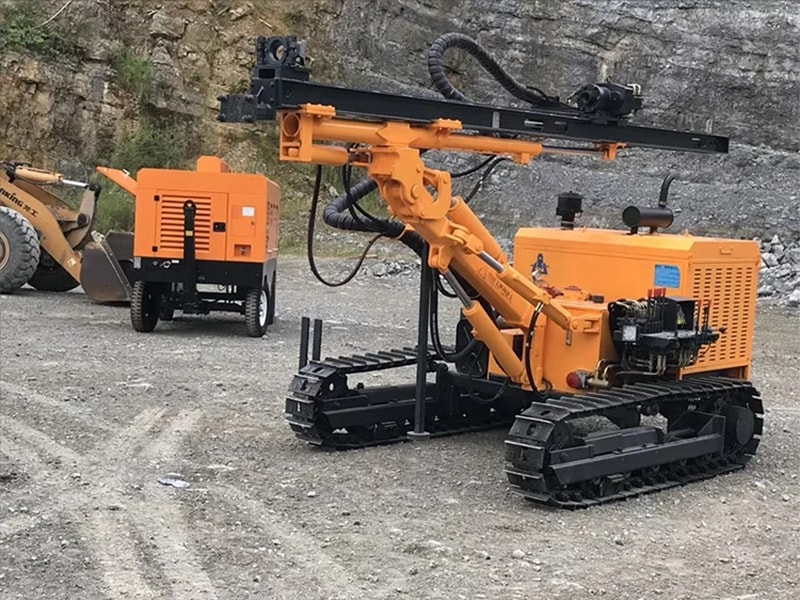
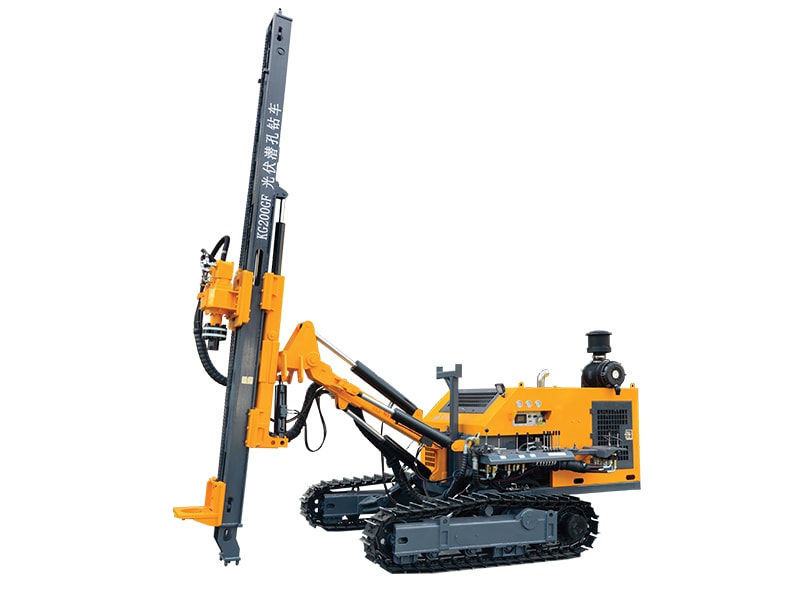
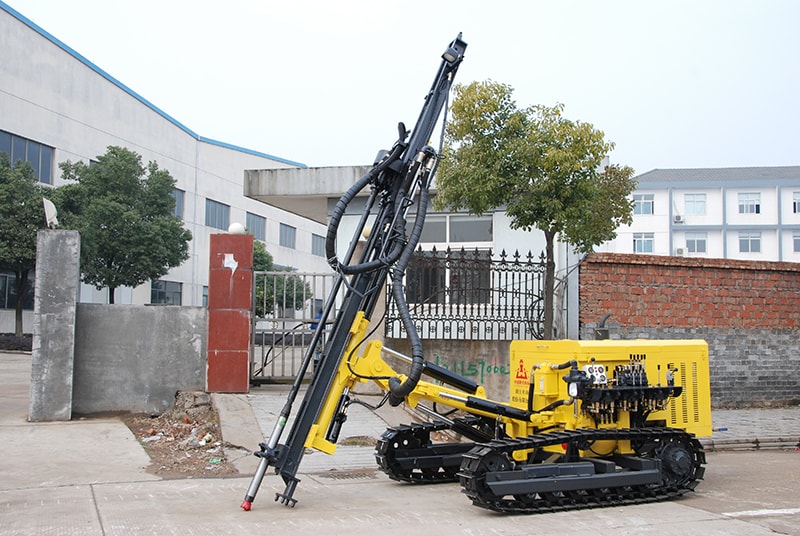
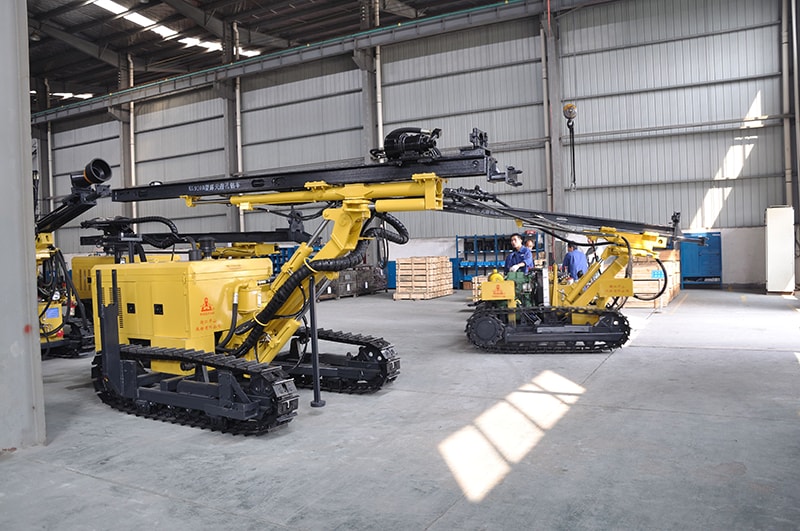
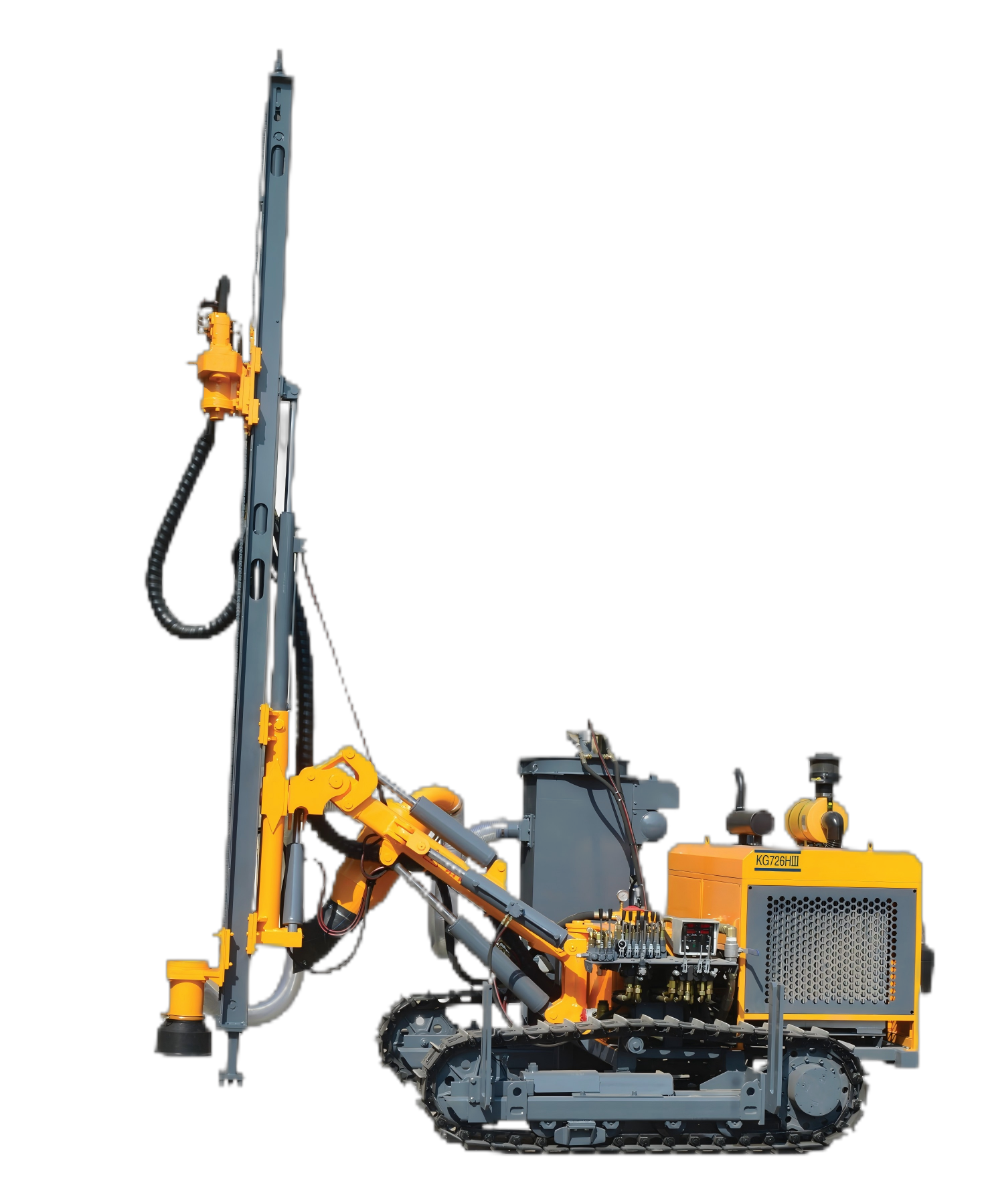
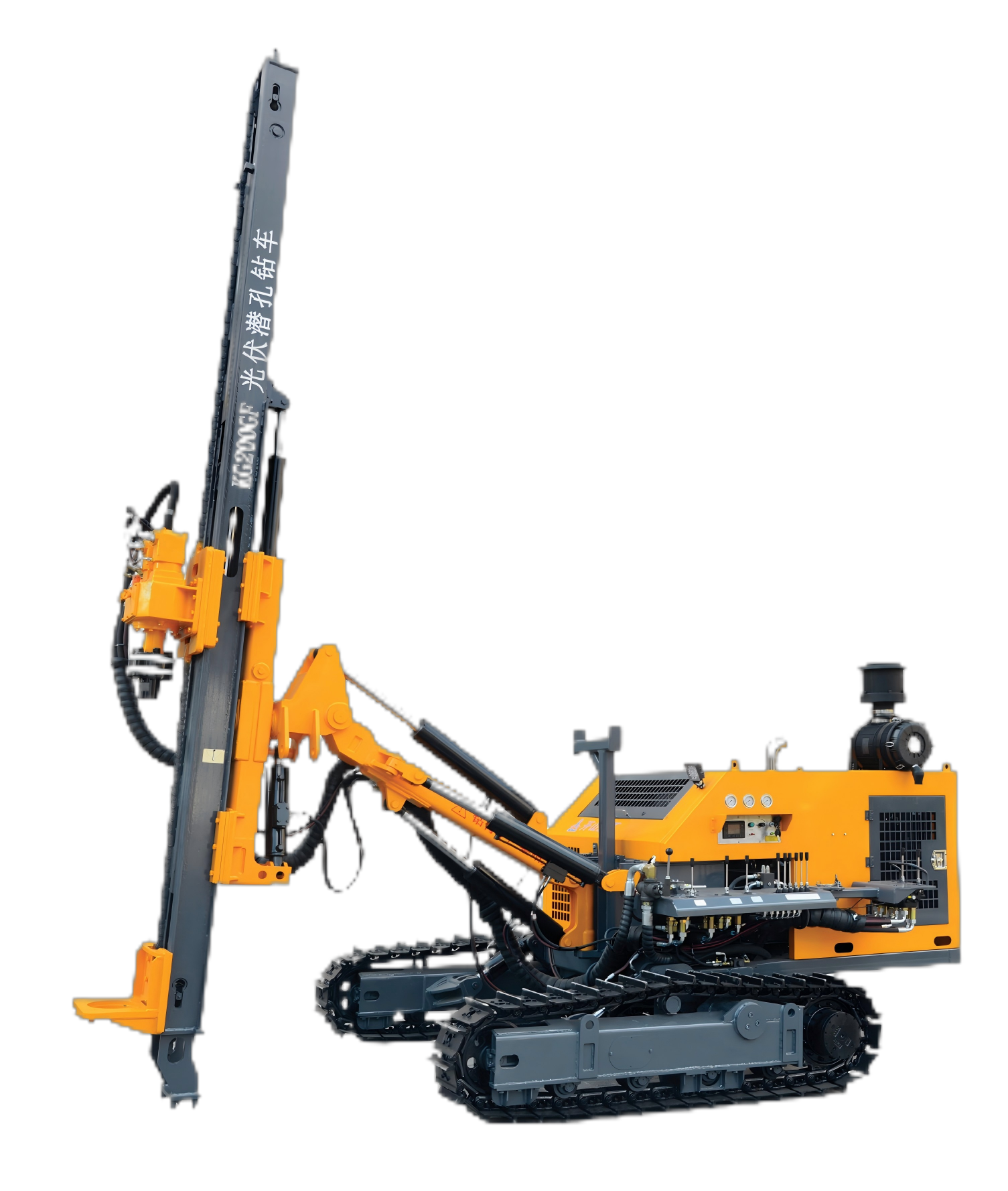
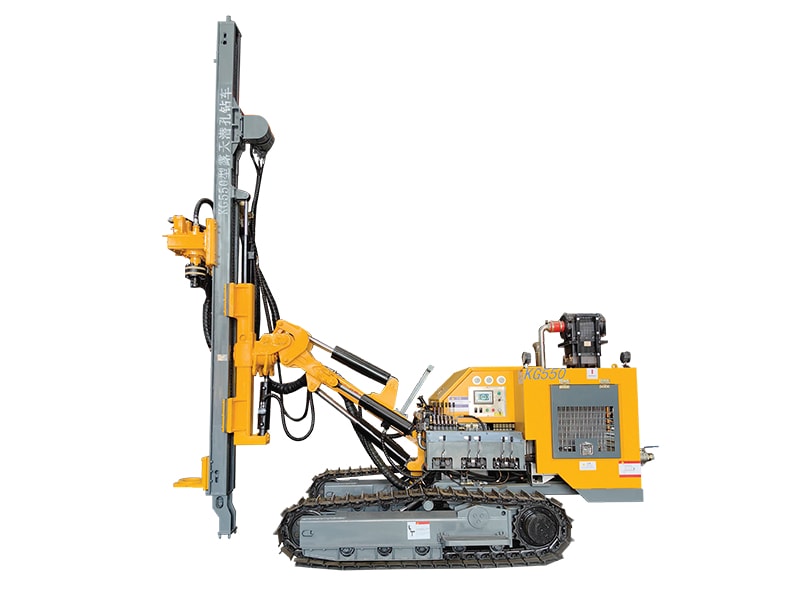
Mid-Range (up to 152 mm)
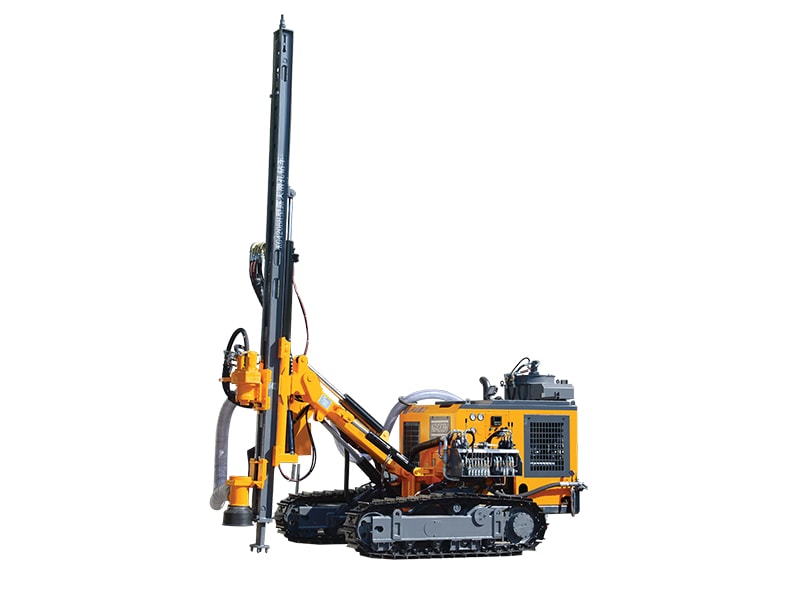
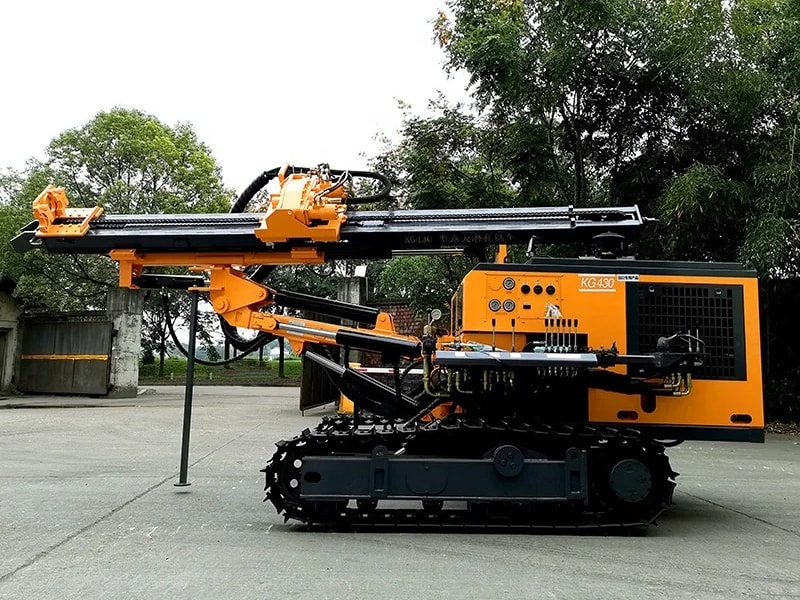
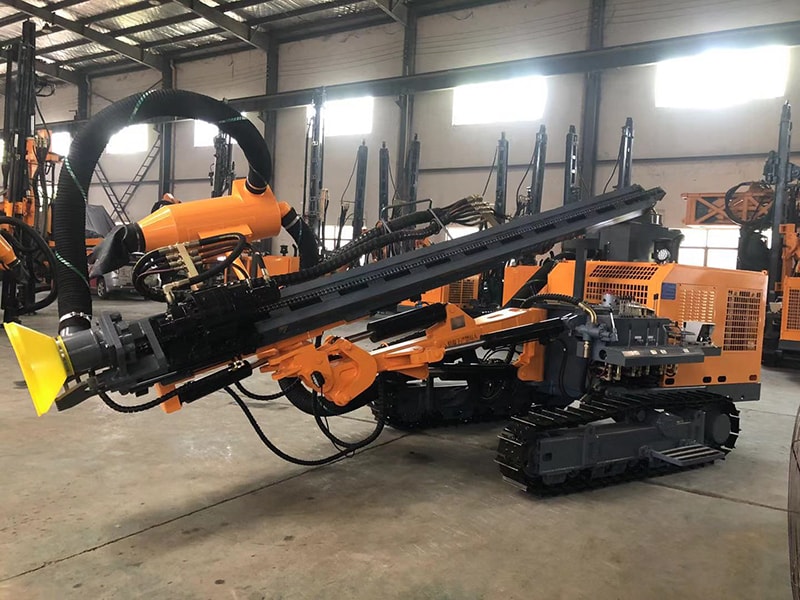
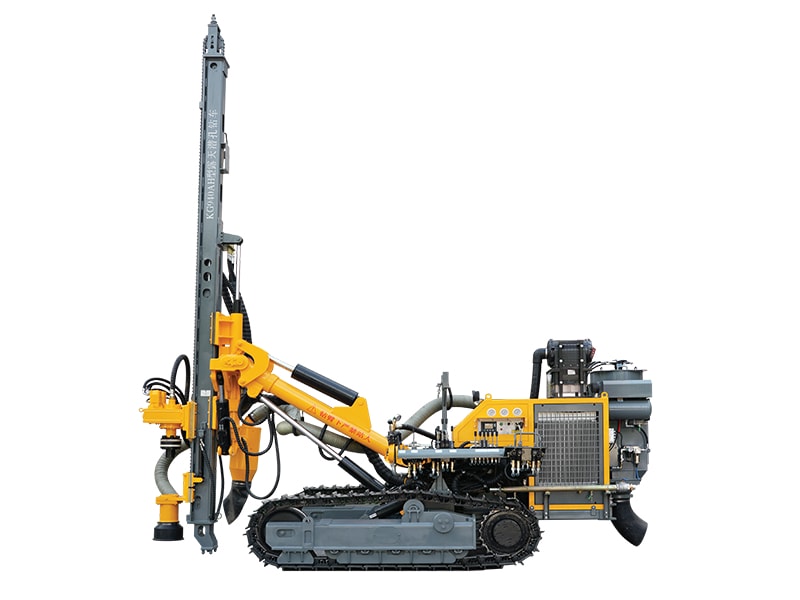
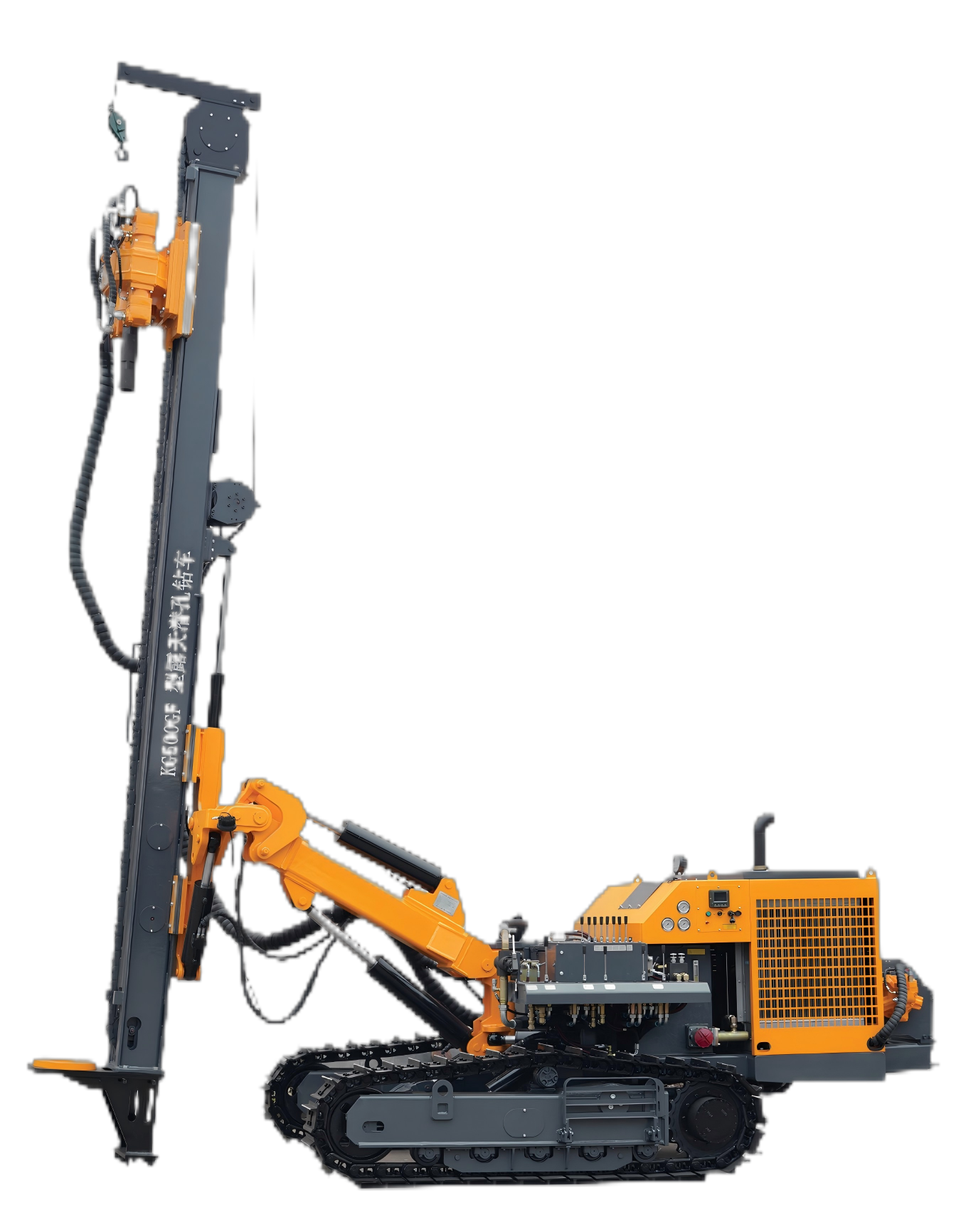
Heavy-Duty (152–203 mm)
Matching Air Compressors
Air demand is set by the hammer, not the rig. Discharge pressure must cover the hammer rating and free air delivery must cover air consumption plus margin.
LGCY-45/25-37/35V
- Pressure
- 25 bar
- Free air delivery
- 45 m³/min
Compatible rigs
KG420B, KG430, KG520, KG940A, KG550
View productLGCY-39/25
- Pressure
- 25 bar
- Free air delivery
- 39 m³/min
Compatible rigs
KG420B, KG430, KG520, KG940A, KG550
View productLGCY-39/25A
- Pressure
- 25 bar
- Free air delivery
- 39 m³/min
Compatible rigs
KG420B, KG430, KG520, KG940A, KG550
View productLGZJ-36/30-41/20
- Pressure
- 20 bar
- Free air delivery
- 36 m³/min
Compatible rigs
KG420B, KG430, KG520, KG940A, KG550
View productLGCY-33/25
- Pressure
- 25 bar
- Free air delivery
- 33 m³/min
Compatible rigs
KG420B, KG430, KG520, KG940A, KG550
View productLGCY-33/25K
- Pressure
- 25 bar
- Free air delivery
- 33 m³/min
Compatible rigs
KG420B, KG430, KG520, KG940A, KG550
View productDTH Hammer, Bits & Rods
Rig + Compressor + Tools = Complete System
The tooling is matched to the same hole diameter and air package as the rig above — a system, not a shopping list.
Request This PackageRecommended Products
View all →Frequently Asked Questions
Rig selection
Which drilling rig should I use for photovoltaic pile driving?
It depends on hole diameter and depth. In our current range, 29 rig models have a published hole range for this work; the largest-capacity three are KG550 (hole 115–254 mm), KT20S (hole 135–254 mm), KT30 (hole 195–254 mm). Send us hole diameter, depth and rock type and we will confirm the fit.
Which drilling rigs are recommended for photovoltaic pile driving?
Based on the published hole range of the rigs listed for this application, the widest-coverage models are KG500GF (up to 500 mm), KG550 (up to 254 mm), KG940A (up to 203 mm). Final selection depends on hole diameter, bench depth and rock conditions — use the equipment selector for a parameter-matched shortlist.
What is the maximum drilling depth for photovoltaic pile driving?
The deepest published capability among the listed models is 25 m (KG430, KG520). Note that economical depth depends on method and tooling: a split rig with a separate compressor is normally economical to about 25 m per bench, while deeper holes need matched rod strings.
Which drilling tools match the rigs used in photovoltaic pile driving?
The parameter-matched tooling for the listed rigs is hammers: K40, K10; bits: K40, K10; rods: 76mm Drill Rods. Tool selection follows the hammer class and the required hole diameter.
How many models are available for photovoltaic pile driving?
15 rig models are currently listed against this application, and matched compressors, hammers, bits and rods are linked to each of them. The complete package can be assembled and quoted as one configuration.
Hole diameter
What hole diameter range can be drilled?
Across the rigs we list for this application the published hole range spans 32–254 mm. Depth capability and rock hardness decide which end of that range applies — tell us the diameter and bench depth and we will match the model.
What hole diameter range can be drilled in photovoltaic pile driving?
Across the rigs listed for this application the published hole range spans 90–500 mm. Smaller diameters favour mid-size rigs with higher drilling frequency; larger diameters need a heavier carrier and matched air volume.
Air compressor
What air compressor is required?
Air demand is set by the hammer, not the rig. The compressors we list for this application cover 5–45 m³/min and discharge pressures from 8 to 35 bar. Match the compressor's free air delivery to the hammer's consumption (plus a 10–15% margin) and make sure discharge pressure covers the hammer rating.
What air compressor is required for photovoltaic pile driving?
Air demand is set by the hammer, not the rig. Parameter-matched compressors for the rigs in this application include LGCY-19/21-21/18, KSZJ-27/23-30/17K, LGCY-17/18-18/15T. Match the compressor's working pressure and free air delivery to the hammer class you intend to run.
Drilling method
—
High altitude & site conditions
Which technical guide should I read first for photovoltaic pile driving?
Start with the selection guides linked on this page (how-to-choose-a-dth-drilling-rig and dth-bit-selection). They explain how hole diameter, bench depth and rock hardness drive the rig and compressor choice.
Download the Catalogue
Full model range, specifications and configuration tables.
Tell Us About Your Mining Project
Three ways in — pick the one that fits how far your project has come.
Photovoltaic Pile Driving